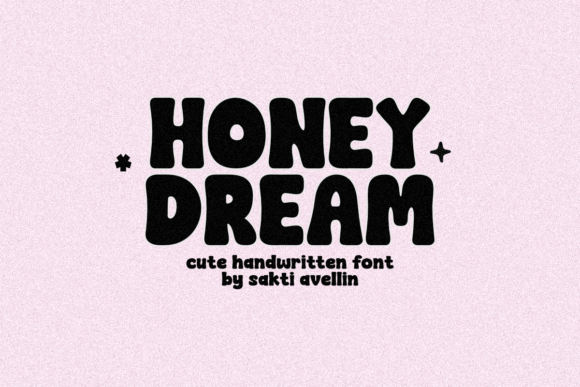
Honey Dream Typeface: Retro Handwritten Font for Branding
I remember the exact moment I realized Honey Dream was going to change my approach to retro branding. It was 2 AM, and I was staring at a blank brand board for a boutique skincare line called "Lumina." The previous logo concepts felt too sterile, too corporate, lacking that warm, nostalgic hug that the client desperately wanted. I dragged Honey Dream into my design software, typed out the word "Glow," and suddenly, the entire mood of the project shifted. The bold, soft, and slightly bubbly shapes didn’t just sit on the canvas; they breathed life into the layout, exuding an authentic aura of the 70s while remaining crisp enough for modern digital screens.
This font is not merely a decorative afterthought; it is a powerful Display font designed to bring back the retro aesthetic of the 70s into your modern designs. As a designer who has tested this typeface across various mediums—from high-resolution packaging mockups to mobile-responsive website headers—I can confidently say that Honey Dream bridges the gap between vintage charm and contemporary professionalism. Below is my honest review of how this handwritten font performs in real-world commercial applications.
Honey Dream for Skincare Packaging and Product Labels
One of the first places I tested Honey Dream was on a series of product labels for a natural honey and beeswax candle line. In the beauty and wellness industry, trust is built through visual warmth. When you place Honey Dream on a label, it immediately communicates organic ingredients and artisanal care without needing additional imagery. The font’s slight irregularity mimics the hand-stamped look of vintage apothecary jars, which resonates deeply with consumers looking for authenticity.
In this context, Honey Dream functions best as a headline or accent font rather than body text. Its bubbly contours demand attention, making it ideal for short phrases like "Handmade," "Organic," or the brand name itself. I found that pairing it with a clean sans serif font for the ingredient list created a perfect balance: the handwritten style captured the eye, while the neutral supporting typography ensured readability and regulatory compliance. This combination elevates the perceived value of the product, allowing small business owners to compete visually with larger, established brands.
Honey Dream in Social Media Graphics and Digital Marketing
Social media feeds are crowded, and scrolling users spend less than a second deciding whether to engage. Honey Dream excels in stopping the scroll because its distinct silhouette stands out against flat backgrounds and photography. During a recent campaign for a local café, we used this font for Instagram story templates and promotional banners. The retro aesthetic of the 70s, combined with the font’s bold weight, creates a sense of fun and approachability that encourages interaction.
When using Honey Dream for social media graphics, consider contrast carefully. Because the letters have varying thicknesses and soft edges, they can get lost on busy images. I recommend placing the text on solid color blocks or using a subtle drop shadow to separate it from complex backgrounds. This font works exceptionally well for quotes, limited-time offers, and event announcements where emotional connection matters more than dense information. For content creators and marketers, Honey Dream provides a quick way to inject personality into daily posts without requiring custom illustration work.
Honey Dream for Creative Studio Identity and Logo Design
Building a brand identity around a handwritten font requires precision. Honey Dream is versatile enough to serve as the cornerstone of a logo design for creative studios, craft shops, or lifestyle blogs. However, it is crucial to understand its limitations. While the font exudes an authentic aura of creativity, it may not be suitable for formal corporate environments or industries requiring strict legibility, such as legal firms or medical institutions.
In my testing, I discovered that Honey Dream shines when used for logotypes consisting of one to three words. Longer names can become difficult to read due to the interconnected nature of some characters and the playful curves. To mitigate this, I often suggest kerning adjustments or breaking the brand name into two lines. Additionally, exploring the included styles and alternates within the font file can help customize the logo further. Some glyphs might offer tighter spacing or unique swashes that better fit a specific brand personality. Remember to check commercial font licensing before using the font in client work, brand identity, packaging, templates, merchandise, websites, digital products, or print-on-demand products to ensure you remain compliant.
Honey Dream Pairing Strategies for Modern Typography Systems
No single font can do everything, and Honey Dream is no exception. To create a cohesive modern typography system, you need to pair it strategically. Since Honey Dream carries strong visual weight and character, it pairs beautifully with minimalist typefaces that provide structural stability.
- With a Sans Serif Font: A geometric sans serif font like Montserrat or Lato creates a striking contrast. The clean lines of the sans serif font ground the whimsical nature of Honey Dream, making the overall design feel balanced and intentional.
- With a Serif Font: For a more editorial or sophisticated look, pair Honey Dream with a classic serif font. This combination evokes a literary or vintage magazine aesthetic, perfect for book covers or fashion editorials.
- With Another Script Font: Avoid pairing Honey Dream with other heavy script fonts, as this can create visual clutter. If you must use another script, choose one that is thinner and more delicate to let Honey Dream remain the focal point.
When designing for web, ensure that the paired fonts load quickly and render consistently across different browsers. Testing Honey Dream in various screen sizes is also essential. While it looks stunning on desktop monitors, verify that it remains legible on mobile devices, especially if used for navigation menus or small call-to-action buttons.
Honey Dream for Wedding Invitations and Personal Stationery
Beyond commercial branding, Honey Dream has found a home in personal stationery projects. Its romantic yet playful vibe makes it an excellent choice for wedding invitations, save-the-dates, and thank-you cards. The font’s soft edges convey elegance without being stiff, appealing to couples who want a unique, non-traditional aesthetic.
For these applications, I recommend using Honey Dream for the names and key dates, while relying on a simple, elegant serif or sans serif font for the logistical details (time, location, RSVP info). This hierarchy guides the guest’s eye to the most important information first. Printing tests revealed that Honey Dream holds up well on textured paper stocks, enhancing the tactile experience of the invitation. The retro 70s influence adds a touch of nostalgia that many guests find charming and memorable.
Practical Considerations for Using Honey Dream
Before incorporating Honey Dream into your final assets, take time to explore the full range of the font file. Check for multilingual support if your audience is international, and verify the availability of ligatures or special characters that might enhance your design. Although Honey Dream is a display font optimized for headlines and logos, always test it at smaller sizes to ensure it doesn’t lose its character or become muddy.
Ultimately, Honey Dream is more than just a collection of glyphs; it is a tool for storytelling. By bringing back the retro aesthetic of the 70s into your modern designs, it allows you to tap into a collective memory of warmth and creativity. Whether you are refreshing a café’s visual identity, launching a new handmade shop, or designing a personal blog, this font offers a reliable way to connect with your audience on an emotional level. Just remember to respect its limitations, pair it wisely, and always prioritize clarity alongside style.