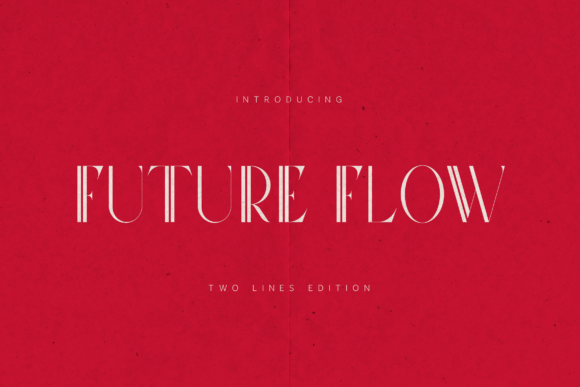
Future Flow: A Modern Display Serif for Editorial Design
The cursor blinks on a blank InDesign canvas. It is 7:00 AM, and the morning coffee has barely kicked in. The project is a digital magazine layout for a lifestyle brand that needs to feel both urgent and elegant. The client wants a cover headline that stops the scroll but doesn’t scream. They need something with authority, rhythm, and a touch of modern sophistication. This is the moment where typography makes or breaks the design. After testing several options, I landed on Future Flow, a typeface that immediately shifted the mood of the entire spread from generic to curated.
Future Flow is a modern two-line distplay serif font designed for expressive editorial typography and high-impact visual design. Featuring elegant serif forms paired with a distinctive double-line cons, it offers a unique visual texture that stands out without sacrificing legibility. In this review, I will explore how this display font performs in real-world publishing scenarios, from newsletter headers to ebook covers, and why it might be the missing piece in your design toolkit.
Future Flow for Magazine Covers and Digital Headers
When evaluating Future Flow, its primary strength lies in its ability to command attention at large sizes. As a display typeface, it is engineered for impact rather than dense reading. In my recent test with a weekly editorial newsletter, I used Future Flow for the main subject line. The double-line contrast within the serifs creates a subtle optical vibration that draws the eye, making the text feel dynamic even when static. Unlike traditional serif fonts that can feel heavy or dated, Future Flow carries a sleek, contemporary edge.
This font excels in editorial design contexts where hierarchy is paramount. For a digital magazine header, the distinct character shapes provide enough personality to establish a brand identity instantly. When paired with ample white space, the font breathes, allowing the intricate details of the letterforms to shine. It is not just a label; it is a graphic element in itself. For bloggers and publishers looking to elevate their site’s aesthetic, using Future Flow for hero images or section dividers adds a layer of polish that signals quality to the reader before they even begin reading the content.
Future Flow for Ebook Titles and Printable Guides
Beyond web layouts, Future Flow proves highly versatile in downloadable assets. I recently redesigned a coaching workbook and needed a title font that felt professional yet approachable. Standard sans-serifs felt too corporate, while script fonts lacked the structural integrity required for a business-oriented guide. Future Flow struck the perfect balance. Its elegant serif forms convey trust and expertise, while the modern cut keeps it feeling fresh and accessible.
In the realm of fonts for digital products, readability on small screens is critical. While Future Flow is a display font best suited for titles, subtitles, and pull quotes, its clear counters and open apertures ensure that even at smaller display sizes, it remains legible. For printable planners and worksheets, the font holds up well in PDF exports. The clean lines render sharply, ensuring that the visual appeal is maintained whether the user views the document on an iPad or prints it out for physical note-taking. This adaptability makes it a valuable asset for creators who sell templates, workbooks, or guides across multiple platforms.
Future Flow for Wedding Invitations and Elegant Branding
The romantic yet structured nature of Future Flow makes it an unexpected but effective choice for wedding stationery and luxury branding. Often, designers reach for scripts for weddings, but pairing a delicate script with a strong serif like Future Flow can create a stunning typographic contrast. I tested this by using Future Flow for the names on a save-the-date card, paired with a fine-line script for the date. The result was sophisticated and timeless.
This application highlights the font’s range within the serif font category. It does not rely on ornamentation to feel fancy; instead, it uses proportion and rhythm. For brands aiming for a "quiet luxury" aesthetic, Future Flow provides the necessary gravitas. It works beautifully for packaging design labels, menu headers for upscale restaurants, or promotional graphics for boutique hotels. The distinctive double-line construction adds a layer of complexity that rewards closer inspection, encouraging the viewer to linger on the design.
Future Flow for Pull Quotes and Section Headings
One of the most practical uses for Future Flow in long-form content is as a tool for breaking up text and guiding the reader’s eye. In article layouts, pull quotes are essential for skimmability. Using Future Flow for these excerpts adds visual interest and reinforces the editorial tone. Because the font is expressive, it can carry the weight of a short sentence without needing additional styling like bolding or underlining.
For section headings, the font helps establish a clear visual hierarchy. When designing a blog post or a chapter opener, using Future Flow in a larger point size creates a natural pause, signaling to the reader that a new idea is beginning. This supports modern typography principles that prioritize user experience and readability. By varying the weight and size of Future Flow, designers can create depth and dimension in their layouts, making dense information feel more organized and less intimidating.
Font Pairing and Practical Considerations
To get the most out of Future Flow, thoughtful pairing is essential. Since it is a display font, it should not be used for body copy. Instead, pair it with a highly readable serif font for paragraphs or a clean sans serif font for captions and navigation elements. A neutral sans-serif provides the necessary contrast to let Future Flow’s decorative qualities stand out without competing for attention. This combination ensures that the design remains balanced and functional.
Before incorporating Future Flow into commercial projects, it is important to check the included styles, alternates, and ligatures. Understanding the full range of the typeface allows you to maximize its versatility. Additionally, always verify the commercial font licensing terms, especially if you are using the font in paid newsletters, client publications, or digital downloads. Ensuring you have the correct rights protects your work and respects the designer’s labor. Ultimately, Future Flow is more than just a pretty face; it is a strategic design asset that enhances communication through refined aesthetics.