Everyday Ugly Typeface Review: A Friendly Display Font for Modern Brands
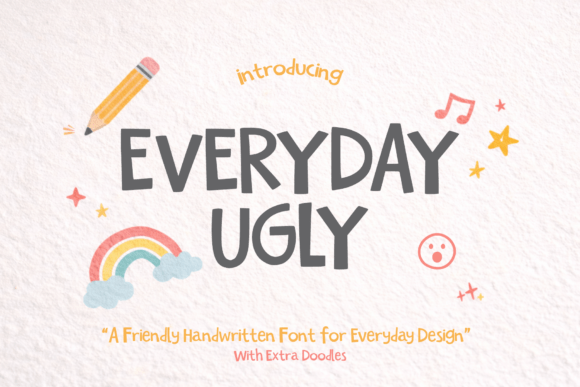
I was staring at a blank InDesign document, trying to nail the visual identity for a new local coffee roaster. The brief called for something warm, unpretentious, and distinctly human—nothing too polished or corporate. I scrolled past the usual suspects: the clean sans-serifs that feel safe but sterile, and the overly ornate scripts that scream “boutique” in a way that feels dated. Then I landed on Everyday Ugly. Don’t let the name fool you—the Everyday Ugly font is a masterclass in approachable, “friendly” typography designed for modern creators. This Everyday Ugly typeface mimics a casual, natural hand-printed style that instantly made my brand board feel alive.
As a brand designer, I’m always skeptical of fonts that try too hard to look “handmade.” Often, they end up looking messy or illegible. But testing this Display font across various design assets revealed a surprising level of sophistication beneath its rough edges. Below is my honest review of how Everyday Ugly performed when put to work in a realistic branding project.
Everyday Ugly for Packaging Design and Product Labels
The first place I tested Everyday Ugly was on packaging mockups for a small-batch skincare line. The client wanted their product labels to feel artisanal and trustworthy, avoiding the cold precision of industrial manufacturing. When I placed the headline text on a kraft paper label, the font’s organic curves and slight irregularities gave it an immediate sense of authenticity. It doesn’t just sit on the page; it feels like it was stamped or printed by hand.
This typeface excels as a creative font for short phrases rather than long paragraphs. On a product jar, words like “Pure,” “Botanical,” or “Handcrafted” popped with character without sacrificing readability. The weight distribution is balanced enough to hold attention on a shelf, yet soft enough to invite touch. For entrepreneurs and online shop owners selling handmade goods, using Everyday Ugly for primary packaging elements can significantly elevate perceived value. It signals care and attention to detail, which is crucial for building a loyal customer base in competitive markets like beauty, food, and lifestyle products.
Everyday Ugly for Logo Design and Brand Identity Systems
Moving from packaging to core identity, I used Everyday Ugly to draft a logo concept for a creative studio. Logos are unforgiving; every curve and angle must be intentional. While many display fonts become illegible at small sizes, Everyday Ugly maintains its charm even when scaled down. However, it shines brightest as a standalone logotype or a prominent accent in a larger typographic system.
In a full brand identity, pairing is key. I found that Everyday Ugly pairs beautifully with a clean, geometric sans serif font for body copy and secondary information. The contrast between the structured, neutral supporting text and the playful, expressive Everyday Ugly headlines creates a dynamic visual hierarchy. This combination works exceptionally well for web design and editorial layouts where you need to guide the reader’s eye effectively. The font acts as a visual anchor, drawing users into the content while the supporting Fonts ensure the message is clear and accessible. It proves that a premium font library doesn’t need to be monolithic to be effective; variety within a cohesive voice is often more powerful.
Everyday Ugly for Social Media Graphics and Digital Assets
In the age of scrolling, grabbing attention in the first few seconds is everything. I applied Everyday Ugly to a series of Instagram posts and website hero banners. The font’s informal nature cuts through the noise of highly produced, stock-photo-heavy feeds. It feels personal, like a note from a friend, which drives higher engagement rates for brands aiming to build community.
For content creators and bloggers, this typeface offers a versatile tool for emphasizing quotes, call-to-action buttons, or special announcements. Its display qualities make it ideal for short bursts of text. I noticed that it performs particularly well in digital formats because its slightly imperfect lines mimic the texture of real-world materials, adding depth to flat screen designs. Whether you are designing a flyer, a podcast cover, or a YouTube thumbnail, Everyday Ugly adds a layer of personality that standard system fonts simply cannot replicate. It helps transform generic digital assets into memorable brand experiences.
Limitations and Best Practices for Everyday Ugly
No single typeface is a silver bullet, and understanding the limitations of Everyday Ugly is just as important as knowing its strengths. Because it is a handwritten font style with distinct character quirks, it is not suitable for long-form body text. Trying to read a 500-word article set entirely in this typeface would cause eye strain and fatigue. It should always be reserved for headlines, titles, logos, and short descriptive phrases.
Additionally, while the font is friendly, it may not be appropriate for formal corporate environments, legal documents, or industries requiring strict adherence to traditional professionalism. If your brand identity demands seriousness and authority, this creative font might undermine that perception. Instead, use it to soften the tone of established brands or to inject energy into new ventures. Before committing to Everyday Ugly for final client work, I recommend creating a comprehensive test suite. Print it out at various sizes, view it on mobile screens, and check it against different backgrounds to ensure legibility and aesthetic harmony.
Final Verdict on Everyday Ugly for Modern Designers
After weeks of integrating Everyday Ugly into a complete branding project—from business cards to website headers—I can confidently say it delivers on its promise. It is a versatile, high-quality Display font that bridges the gap between professional design and authentic expression. For designers seeking to add warmth and humanity to their projects, this typeface is an invaluable addition to their toolkit.
Remember to review the included styles and weights to maximize versatility, and always check the commercial font licensing terms before using the font in client work, merchandise, or print-on-demand products. When used thoughtfully, Everyday Ugly does more than just display text; it tells a story. And in today’s visual landscape, storytelling is everything.